Color Block Run - Puzzle Game
Play2Ever GamesPuzzle
4.9331.00 Reviews
- Version
- 1.0.049
- Installs
- 1.00M
- Age Rating
- Everyone
Screenshots
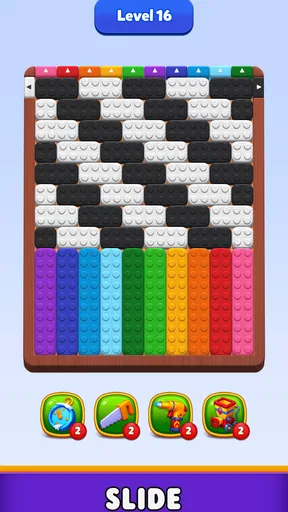
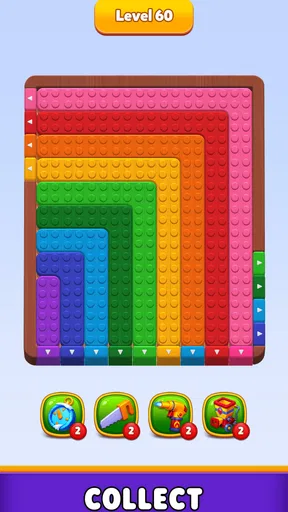
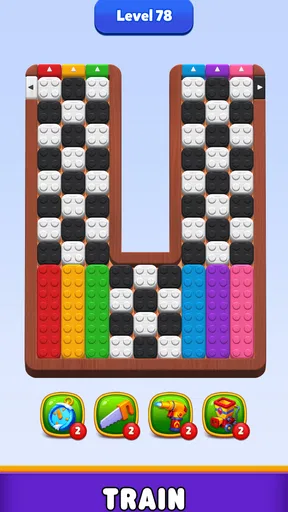
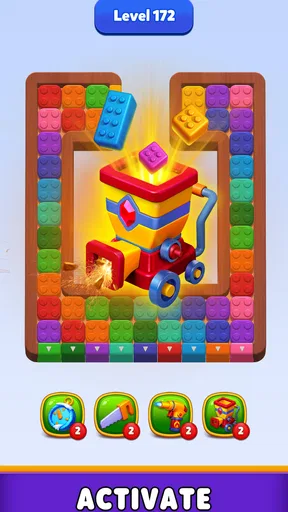
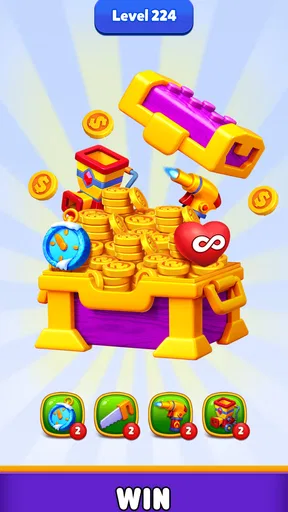
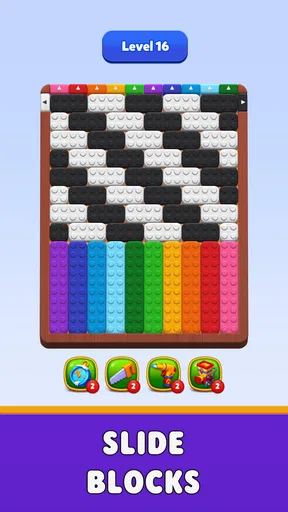
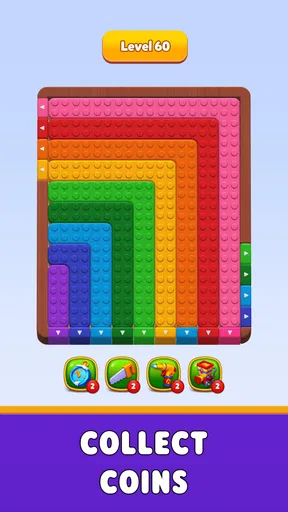
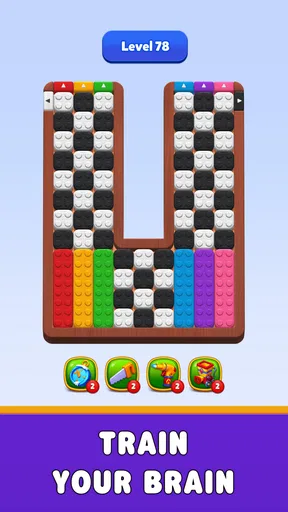
Our Review of Color Block Run - Puzzle Game
 Analysis by Appyee
I came away from Color Block Run with the feeling that it understands why people enjoy small puzzle games: the rules are easy to grasp, the visual result is satisfying, and a short session can still make me pay attention. Developed by Play2Ever Games, this free puzzle game focuses on matching colors while keeping the experience light enough for casual play. Its store summary promises relaxation alongside mental challenge, and that balance is the main reason I can imagine recommending it to a friend.
That recommendation is not universal. I would choose it for someone who wants a quick, approachable color-matching game rather than a deep strategy title, story-driven adventure, or competitive brain-training tool. The game is available for everyone and runs on Android 7.0 or later, which makes it accessible to many players with older phones. It has also built a strong audience, with more than a million installs and an average rating of 4.9 from roughly thirteen thousand ratings.
Why the simple color-matching idea works
The strongest part of the experience is its immediate readability. A puzzle based on colored blocks does not require a long tutorial or a complicated explanation before I can begin making decisions. I can look at the board, identify the relevant colors, and focus on the next move instead of learning a large set of rules. That low entry barrier makes the game suitable for a short break, especially when I do not want to commit to a long level or remember a complicated storyline.
What makes this more than a purely passive time-killer is the way matching encourages me to look ahead. The obvious move is not always the most useful one. A color that appears ready to match may be better left in place if moving it interferes with a later arrangement. Even without a heavy strategy system, this creates a small but worthwhile tension between acting quickly and preserving options.
I found that the relaxing side of the game comes from the visual order created by successful matches. Watching a messy arrangement become cleaner gives each action a clear payoff. That matters in this category because the best casual puzzle games make progress feel visible. I do not need a complicated reward structure to understand that a good move has improved the board.
The game is also well suited to interrupted play. If I have only a few minutes while waiting for an appointment or taking a break from work, a color-matching puzzle is easier to pick up than a game that depends on a long chain of events. I can concentrate, make progress, and put the phone down without feeling that I have abandoned a larger narrative.
One useful way to play is to treat each move as a planning exercise rather than tapping the first available match. I try to scan the whole visible arrangement first, identify colors that may become blocked, and then choose the move that leaves the board easiest to read. This approach produces a better experience than rushing, and it turns the game into a gentle focus exercise rather than simple repetition.
Another practical tip is to use the early part of a session to learn the game’s visual rhythm. Instead of chasing speed, I pay attention to how the board changes after a match. That helps me recognize whether a move is opening space, creating a chain of possibilities, or merely removing one obvious group. The distinction is small, but noticing it makes the puzzles feel more deliberate.
For a parent looking for an age-appropriate casual game, the Everyone rating is reassuring in a general sense. I would still keep the usual family habits around screen time and purchases, but the presentation is aimed at broad accessibility rather than a mature audience. For an adult, that same simplicity can be useful after a busy day: it gives the mind something concrete to organize without demanding the emotional attention of a more intense game.
The game’s popularity supports the impression that its central idea is easy to enjoy. Play2Ever Games has released it as a free title, and the current version is 1.0.049. That combination makes it straightforward to try without an upfront payment, although the presence of optional purchases means I would still review the purchase settings before handing the phone to a child.
Small decisions matter more than fast tapping
The most interesting trade-off is between speed and clarity. A player who taps rapidly may get through simple moments quickly, but rushing can make the board harder to read and lead to avoidable mistakes. I prefer a slower rhythm: first identify the colors that have the fewest alternatives, then consider whether matching them now will help or hurt the remaining arrangement.
This is especially useful when the board begins to look visually busy. Color-based puzzles can become tiring if every block appears equally important. I reduce that feeling by narrowing my attention to one area at a time, while still checking whether a move affects another part of the board. It is a simple workflow, but it prevents the game from becoming a blur of taps.
I also recommend playing in short focused sessions rather than treating the game as background entertainment. Music, video, or conversation can make it harder to notice the relationships between colors. When I give the puzzle even a little undivided attention, the matching mechanic feels more satisfying and the challenge becomes clearer. When I play absent-mindedly, the experience becomes much more repetitive.
That difference reveals one of the game’s quiet strengths: it can serve two audiences at once. A casual player can use it as a calming distraction, while a more attentive player can look for better sequencing and cleaner decisions. It does not force either style, although players seeking a highly demanding logic system may eventually find the core idea too narrow.
Where the experience may lose momentum
The same simplicity that makes the game approachable can also limit its long-term appeal. Color matching is immediately understandable, but it does not automatically provide the variety of a puzzle game built around several distinct mechanics. If you prefer word puzzles, physics problems, number systems, or elaborate spatial challenges, this title may feel modest after the initial novelty settles.
There is also a possible accessibility concern for anyone who has difficulty distinguishing colors. Because color is central to recognizing the available matches, the experience depends heavily on visual separation. I would be cautious about recommending it to a player with color-vision limitations unless the game’s presentation is comfortable for that person in practice. A puzzle built around symbols, shapes, or text would be a safer alternative for that audience.
The free entry point is convenient, but in-app purchases range from $0.99 to $199.99 per item. That does not make the game unsuitable, yet it is an important part of the decision. I would disable or protect purchases on a shared device, particularly when children can access the game. Anyone who wants a completely purchase-free experience should check the device’s controls first rather than assuming that a free download has no optional spending.
Another limitation is the narrow emotional range. The game can relax me and keep my attention, but it is not the right choice when I want a story, a strong sense of character, or a dramatic progression system. It also does not replace a serious logic-training routine. I see it as a pleasant mental warm-up, not as a formal measure of memory, reasoning, or cognitive improvement.
The rating is impressive, but I would not use it as the only reason to install the game. High user approval suggests that the basic experience works for many people, yet puzzle preferences are personal. Someone who dislikes color-focused interfaces or repeated matching tasks may not enjoy it even if the broader audience does. I would judge the title by the kind of attention I want to give it, not by the rating alone.
A realistic place for it in everyday life
Imagine that I have ten minutes before a train arrives. I do not want to start a game that will punish me for stopping halfway, and I am too restless to read a long article. This is the situation in which Color Block Run makes the most sense. I can open it, focus on a compact visual problem, and leave when the train arrives. The session has a clear beginning and end without requiring a large time investment.
It can also work as a transition between tasks. After finishing a demanding piece of work, I may want something more engaging than scrolling but less intense than a competitive game. A few thoughtful color matches give me a controlled change of pace. The important point is to use it intentionally: if I play while distracted by several other apps, its main strength—focused visual organization—gets lost.
For younger players, I would present it as a game that rewards looking before acting. That habit is more valuable than simply trying to finish quickly. I would also explain that free installation does not mean every optional item is free, and I would keep purchase protection active. Those two small steps make the game easier to share responsibly in a family setting.
For older phones, the minimum requirement of Android 7.0 or later is helpful because it does not restrict the game to only recent devices. Still, the experience of any mobile game can vary with the phone’s screen, performance, and battery condition. I would install it on the device I actually plan to use and judge the comfort of the colors and controls there, especially if I expect to play for longer sessions.
On iOS, the same audience advice applies in principle: this is for someone who wants an accessible color puzzle, not someone searching for a complex multi-system game. The key question is not whether the title is fashionable or technically ambitious. It is whether matching colored blocks gives the player enough satisfaction to return without needing a story or competitive ranking to provide motivation.
How it compares with familiar puzzle alternatives
Compared with a word puzzle, this game asks less from language and more from visual recognition. That makes it a better fit when I am tired, working in a second language, or simply not in the mood to search for vocabulary. A word-based game is usually better when I want variety through clues and definitions, while this title is more immediate and visually direct.
Compared with a number puzzle, Color Block Run feels less analytical at first. Number games often reward exact calculation and long chains of deduction; here, the challenge comes from reading color relationships and choosing an effective sequence. I would choose the number alternative when I want a more structured logic workout, but I would choose this one when I want a softer entry into puzzle play.
Compared with a match-three game, the appeal is likely to be less about spectacle and more about the act of organizing colors. Match-three titles often surround matching with characters, boosters, missions, and layered progression. That can be more exciting, but it can also be busier. Color Block Run is a better choice if I want the matching idea to remain the main event rather than one part of a larger package.
Compared with a minimalist offline puzzle, the deciding factor is personal taste. A minimalist alternative may offer a more fixed, contemplative structure, while this game is easier to approach as a casual color activity. If I want a quiet puzzle that rewards deep planning over many sessions, I might look elsewhere. If I want something that communicates its appeal almost immediately, this game has the advantage.
In other words, the title succeeds by keeping its promise narrow. It does not need to compete with every puzzle format. Its value is in making color matching approachable, visually rewarding, and convenient for short play. That focus is a strength when it matches my mood, but it becomes a weakness if I expect constant novelty or a broad collection of mechanics.
Who should install it, and who should skip it
I would recommend it to casual puzzle players, commuters, families looking for an Everyone-rated option, and anyone who enjoys arranging visual patterns without learning complicated rules. It is particularly suitable for people who like games that can be played in small portions and who appreciate a calm challenge rather than constant pressure.
I would be more hesitant to recommend it to players who need a strong narrative, competitive multiplayer, elaborate progression, or a wide range of puzzle types. I would also suggest caution for anyone who finds color-heavy interfaces difficult to read. In those cases, a word, number, or symbol-based puzzle is likely to be a better fit.
Before installing, I would make two practical checks. First, I would confirm that the phone runs Android 7.0 or later if I am using Android. Second, I would protect in-app purchases because the optional items span from $0.99 to $199.99. Those checks take little time and answer the two most important practical questions: whether the device is compatible and whether spending can be controlled.
My final view is favorable, with a clear qualification. Color Block Run is a good small puzzle game because it turns a simple color-matching idea into an easy way to focus, unwind, and make a few meaningful decisions. Its strongest use is not as an all-day gaming destination, but as a reliable short-session companion. The free price makes trying it simple, and the large audience and strong average rating suggest that its approachable design has connected with many players.
At the same time, I would not mistake accessibility for unlimited depth. The color-centered mechanic may feel repetitive to players who want constant invention, and the optional purchases deserve sensible device controls. With those points in mind, I would recommend giving it a try if you want a calm, readable puzzle for spare moments. If your ideal game is more strategic, story-rich, language-based, or visually independent of color, another category will serve you better.
Verdict
Strengths of Color Block Run - Puzzle Game
- Simple controls make it easy to start playing immediately.
- Short levels are ideal for quick gaming sessions.
- Bright colors and clean visuals are easy to follow.
- Gradually increasing difficulty keeps the puzzles engaging.
- Works well for players who enjoy casual, stress-free challenges.
Limitations of Color Block Run - Puzzle Game
- Some levels may feel repetitive after extended play.
- Progress can become frustrating when solutions are not obvious.
- Ads may interrupt gameplay, depending on the version.
- Limited variety may reduce long-term replay value.
- The game may feel too simple for experienced puzzle players.
Other Releases by Play2Ever Games
View All
Mega Tycoon: Build Coin World
Casual4.7
Similar Picks in This Category
View All
Block Blast!
HungryStudio4.8

Braindom: Brain Games Test
Lahana Game Studio4.6

AMAZE!
CrazyLabs LTD4.6

Sudoku - Classic Sudoku Puzzle
Oakever Games4.7

Art Puzzle - Puzzle Games
Easybrain4.8

Amaze GO!
Oakever Games4.9
Frequently Asked Questions
What is Color Block Run - Puzzle Game?
Color Block Run - Puzzle Game is a casual puzzle game that combines quick movement with color-matching challenges. Players guide a character or block through changing paths, collect or avoid colored objects, and try to reach the finish while following the correct color rules. Its simple controls make it easy to start, while increasingly difficult levels test timing, observation, and decision-making.
How do you play Color Block Run - Puzzle Game?
Gameplay is generally based on moving through short obstacle courses and reacting to colored blocks, platforms, or barriers. Depending on the level, you may need to match colors, change direction, avoid incorrect objects, or select the safest route. Controls are designed for touchscreens, so swiping or tapping usually handles movement. Paying attention to the upcoming path is more important than moving quickly.
Is Color Block Run - Puzzle Game free to download and play?
The game can typically be downloaded free of charge, allowing users to try the main levels without paying upfront. However, free puzzle games may include advertisements, optional in-app purchases, or paid items such as extra lives, cosmetic content, boosters, or ad removal. Before downloading, check the Google Play Store or App Store listing for the current pricing, purchase options, and age rating.
Does Color Block Run - Puzzle Game require an internet connection?
An internet connection may not be necessary for every part of Color Block Run - Puzzle Game, especially if you are playing previously loaded levels. Nevertheless, online access can be required for advertisements, reward videos, updates, cloud features, analytics, or in-app purchases. If you plan to play while traveling or offline, test the game after disabling Wi-Fi and mobile data because functionality can vary by version.
Is Color Block Run - Puzzle Game suitable for children?
Color Block Run - Puzzle Game is generally suitable for players who enjoy simple, colorful, non-violent challenges, and its basic mechanics can be easy for children to understand. Parents should still review the store rating, advertising policy, and in-app purchase settings before allowing younger players to use it. Some levels may require quick reactions, and frequent ads or purchase prompts could affect the experience.
Play our best games!


